Faculty
Assistant Professor of Neurology

This e-mail address is being protected from spambots. You need JavaScript enabled to view it
Dr. Aguirre has developed image analysis methods used in neuroscience labs around the world. His interest in the design, analysis and interpretation of brain imaging studies has recently led him to focus on the ways in which neuroimaging is used, and misused, in a variety of different societal contexts.
Representative Publication:Aguirre, G. (2008).
"The Political Brain" Cerebrum. Published online on September 12, 2008


Emanuel and Robert Hart Professor of Bioethics
This e-mail address is being protected from spambots. You need JavaScript enabled to view it
Dr. Caplan pursues a variety of interests within bioethics, including the ethical dimensions of brain enhancement.
Representative Publication:A. Fiester, V Ravitsky AL Caplan eds., The Penn Center Guide to Bioethics, New York: Springer 2009AL Caplan, Good, better, best?” In: J Savelescu and N Bostrum, eds., Human Enhancement, Oxford University Press, 2009
AL Caplan Mind reading: Technological advances catapult mental health to the front of ethics debates,American Prospect, 2008:21-3 Caplan, A. & Elliott, C. (2004). “Is it ethical to use enhancement technologies to make us better than well?” PLoS Med 1(3), e52: pp. 173-175.

Professor of Neurology
This e-mail address is being protected from spambots. You need JavaScript enabled to view it
Dr. Chatterjee is a cognitive neurologist whose work encompasses the societal and ethical implications of brain enhancement. A related interest is the role of physicians as healers versus lifestyle enhancers.
Representative Publication:Chatterjee, A. 2004. Cosmetic neurology: the controversy over enhancing movement, mentation, and mood. Neurology 63 (6), 968-974.

Walter H. Annenberg Professor of Natural Sciences
This e-mail address is being protected from spambots. You need JavaScript enabled to view it
Dr. Farah is interested in a variety of social, legal and ethical issues in neuroscience, including practical issues arising from brain enhancement and brain imaging, and philosophical issues related to personhood and the mind-body problem.
Represntative Publication:Farah, M.J. (2005). Neuroethics: The practical and the philosophical. Trends in Cognitive Sciences, 9, 34-40.
Professor of Bioengineering and Associate Professor of Electrical and Systems Engineering
This e-mail address is being protected from spambots. You need JavaScript enabled to view it
Dr. Foster is a professor of bioengineering whose varied interests include the social and ethical impact of neurotechnologies, including neural prostheses and brain imaging. He also teaches the "Ethics for Engineers" course at Penn.
Representative Publication:Foster, K.R. (2006). "Engineering the brain." In Illes, J (Ed.) Neuroethics: defining the issues in theory, practice and policy. Oxford University Press.
Assistant Professor of Psychology
This e-mail address is being protected from spambots. You need JavaScript enabled to view it
Dr. Goodwin studies the psychology of moral reasoning, including the ways in which people think about, and judge the morality of, brain enhancements. His current research focuses on why people resist neuro-enhancement technologies that improve psychological functioning, and focuses particularly on people's conceptions of the self and the causal assumptions they make regarding their behavior.
Representative Publication:Riis, J., Simmons, J.P., Goodwin, G.P. Preferences for Enhancement Pharmaceuticals: The Reluctance to Enhance Fundamental Traits. Journal of Consumer Research, July 10, 2008
Associate Professor of Medicine and Medical Ethics
This e-mail address is being protected from spambots. You need JavaScript enabled to view it
Dr. Karlawish's research concerns the ethical, legal and social issues that arise in the lives of persons with cognitive impairment from diseases such as Alzheimer’s disease, Parkinsons disease, and mild cognitive impairment. His work has examined questions such as how does one evaluate patients’ quality of life or competence to make decisions about treatment or research participation when the disease in question affects cognition? What accommodations should society provide to facilitate voting by older adults with cognitive impairment?
Representative Publication:Karlawish JH. Bonnie RJ. Appelbaum PS. Lyketsos C. James B. Knopman D. Patusky C. Kane RA. Karlan PS. Addressing the ethical, legal, and social issues raised by voting by persons with dementia. JAMA. 292(11):1345-50, 2004 Sep 15.
Assistant Professor of Psychiatry
This e-mail address is being protected from spambots. You need JavaScript enabled to view it
Dr. Langleben studies the neural correlates of deception, drug craving, and the effects of advertizing, as well as the social and ethical issues raised by our growing ability to image these processes.
Representative publication:Langleben DD, Loughead JW, Ruparel K, Hakun JG, Busch-Winokur S, Holloway MB, Strasser AA, Cappella JN, Lerman C. Reduced prefrontal and temporal processingand recall of high "sensation value" ads. Neuroimage. 2009 May 15;46(1):219-25. Epub 2009 Jan 14. PubMed PMID: 19457412.Glocker ML, Langleben DD, Ruparel K, Loughead JW, Valdez JN, Griffin MD, Sachser N, Gur RC. Baby schema modulates the brain reward system in nulliparous women. Proc Natl Acad Sci U S A. 2009 Jun 2;106(22):9115-9. Epub 2009 May 18. PubMed PMID: 19451625; PubMed Central PMCID: PMC2690007.
Langleben DD, Loughead JW, Bilker WB, Ruparel K, Childress AR, Busch SI, Gur RC. Telling truth from lie in individual subjects with fast event-related fMRI (PDF file). Hum Brain Mapp. 2005 Dec;26(4):262-72.

David and Lyn Silfen University Professor and
Professor of Biomedical Ethics and History and Sociology of Science
This e-mail address is being protected from spambots. You need JavaScript enabled to view it
Dr. Moreno’s current interests include the role of neuroscience in the military and ethical issues concerning human-animal neural stem cell chimera.
Representative publication:
Moreno, J.D. (2006) Mind Wars: Brain Research and National Defense. Dana Press.


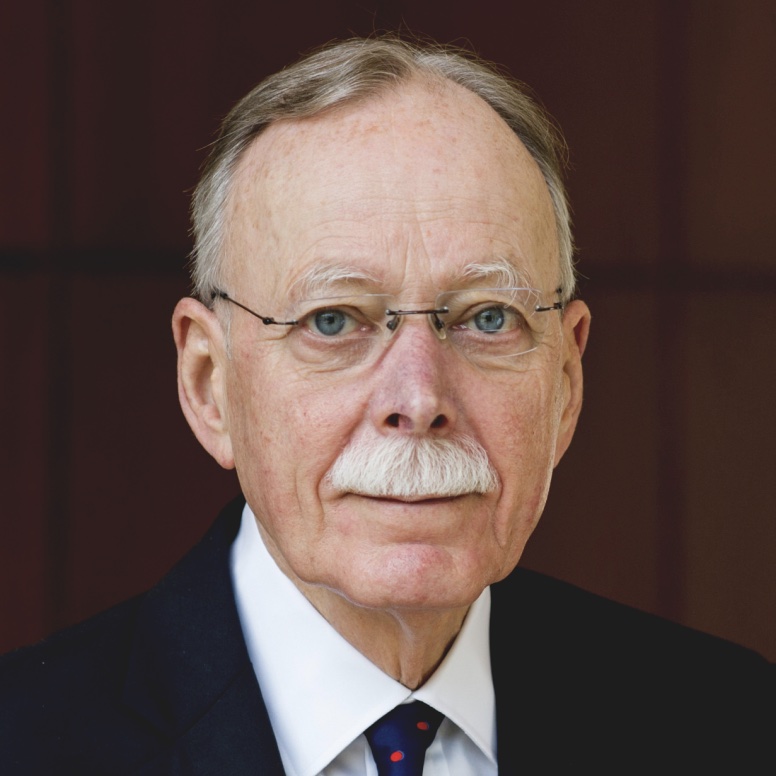
Ferdinand Wakeman Hubbell Professor of Law;
Professor of Psychology and Law in Psychiatry
This e-mail address is being protected from spambots. You need JavaScript enabled to view it
Dr. Morse works on problems of legal and moral responsibility and their compatibility with the materialist worldview of neuroscience. He is interested in the roles of neuroscience and behavioral science in explaining and excusing antisocial and criminal behavior.
Representative Publication:
Morse, S.J. Brain Overclaim Syndrome and Criminal Responsibility: A Diagnostic Note, 3 OHIO ST. J. CRIM. L. 397 (2006).

Associate Professor of Radiology
This e-mail address is being protected from spambots. You need JavaScript enabled to view it
The goal of Dr. Newberg's research is to understand the neurobiology of spirituality and religious belief. He has pursued this goal using functional neuroimaging of individuals engaged in prayer, meditation and other states of religious transcendence and as director of the Center for Spirituality and the Mind.
Representative Publication:
Newberg, A.B. & Lee, B.Y. (2005). The neuroscientific study of religious and spiritual phenomena: or why God doesn't use biostatistics." Zygon 40(2): 469-490.

Professor of Criminology and Psychiatry
This e-mail address is being protected from spambots. You need JavaScript enabled to view it
Dr. Raine studies the biological bases of antisocial and violent behavior, including the neural bases of violent aggression and the role of neuroscience in understanding and treating such behavior in criminal offenders.
Representative Publication:
Raine, A. and Yang, Y. (2006). Neural foundations to moral reasoning and antisocial behavior. Social, Cognitive, and Affective Neuroscience 1 203-213.

Assistant Professor of Philosophy
This e-mail address is being protected from spambots. You need JavaScript enabled to view it
Dr. Schneider is a philosopher whose background includes philosophy of mind, metaphysics and cognitive science. Her current work involves the computational theory of mind and the mind-body problem. She approaches issues in neuroethics, particularly enhancement and transhumanism, from the vantage point of philosophy of mind and metaphysics.
Representative publication:
Schneider, S. Future Minds: Transhumanism, Cognitive Enhancement and the Nature of Persons. In Radvisky, V. and Caplan A. (eds.) Penn Bioethics Reader.
"Mindscan: Transcending and Enhancing the Brain." in Science Fiction and Philosophy., Susan Schneider ed. Oxford: Wiley-Blackwell. 2009
The Blackwell Companion to Cosnciousnesss (co-edited with Max Velmans).Oxford: Blackwell 2007


Assistant Professor of History and Sociology of Science
This e-mail address is being protected from spambots. You need JavaScript enabled to view it
Dr. Tresch is an historian of science and technology interested in the relationships between the human mind and technological world. He is currently working on an ethnographic study of the Mind and Life Institute, which applies the methods of western neuroscience to the understanding of Buddhist meditation.
Representative publication:
Tresch, J. “In a Solitary Place: Raymond Roussel’s Brain and the French Cult of Unreason.” Studies in History and Philosophy of Biological and Biomedical Sciences, Special Issue on “The Brain in the Vat,” 35 (2), June 2004, pp. 307-332.

Robert Mundheim Professor of Law
This e-mail address is being protected from spambots. You need JavaScript enabled to view it
Dr. Wax is a neurologist and lawyer, interested in biological and psychological constraints on socialization, development, social stratification, and gender-related behaviors at work and in families.
Representative publication:
Wax, A (2004). Evolution and the Bounds of Human Nature, 23 (6) Law and Philosophy, 23(6): 527-591.
The Latest News
-
Penn CNS faculty member joins IOM Neuroscience Forum The Institute of Medicine's Neuroscience Forum brings together leading researchers, policymakers...
-
Penn professor mines science fiction for insights on neuroscience and society Philosophy professor Susan L. Schneider has just published Science Fiction and Philosophy...
- 1
- 2